7,000+ Se Zyada
Jobs & Internships
Opportunities
Explore Karo
Agar aapne apni degree ya diploma complete kar liya hai, to JobReady Placements aapke liye lekar aaya hai
nayi internships aur job training opportunities.

Category Se Jobs & Internships Dekho
Browse All


_778.png)



_667.png)
Top Companies Ke Nazar Mein Aayen
Apna resume upload karke top employers se connect ho – ek click mein career ko naye level par le jao.
Resume Update KareinChune Huye Top Companies
Browse All
1 active post
Visa Care Migration Consultants
Australia
VisaCare Migration Consultants Pty Ltd is an Australian private company specializing in migration and education consultancy services.

1 active post
MAXIMAX EDUCATION AND MIGRATION SERVICES
Australia
MaxiMax Education & Migration Services is a professional consultancy dedicated to helping students and professionals achieve their global education and migration goals. With offices in Australia, Nepal, and Myanmar, we provide expert guidance on study options, visa processing, migration pathways, and career development.

1 active post
Harward International College
Australia
Harward International College (HIC) strives to offer affordable and high quality education in a friendly environment. We believe in Power of Knowledge and Individual can get Supreme Power through his/her acquired knowledge. Simply in few words “Knowledge is Power Supreme“.

1 active post
Hecho En Mexico
Australia
Hecho en Mexico first opened in 2013 in the vibrant suburb of Fitzroy, in Victoria, quickly becoming the #1 Mexican restaurant in the area and a local favourite

1 active post
Gami Chicken & Beer
Australia
Hecho en Mexico first opened in 2013 in the vibrant suburb of Fitzroy, in Victoria, quickly becoming the #1 Mexican restaurant in the area and a local favourite

1 active post
Sapience college
Australia
The primary goal of Sapience College is to equip students, the community, and the market with exceptional human resources that possess the necessary skills to meet the contemporary demands of the 21st century in Australia and globally. The college strongly values the pursuit of excellence in teaching, leadership, and recognition while also fostering a deep appreciation for vocational education and training. Sapience College, identified by RTO Number 45185 and CRICOS Number 04016D, is a recognized educational institution committed to offering students a dynamic and distinctive learning journey.Mission & ValuesSapience College strives to provide students with training and assessment options that are of exceptional quality, flexible, and affordable. By doing so, Sapience College contributes to the growth and sustainability of Australian businesses by supplying them with skilled and knowledgeable workers who are well-prepared for their roles.Our ValuesWe are passionate about what we do when it comes to teaching, learning, developing skills, and exchanging knowledge. We develop leaders with inspiring future visions. Collaboration enables us to create services that truly add value to the real-world experiences, employment, and careers of our learners.Our MissionSapience College strives to provide students with training and assessment options that are of exceptional quality, flexible, and affordable. By doing so, Sapience College contributes to the growth and sustainability of Australian businesses by supplying them with skilled and knowledgeable workers who are well-prepared for their roles.

0 active post
COMMONWEALTH BANK OF AUSTRALIA
Australia
We're Australia’s leading provider of integrated financial services, including retail, premium, business, and institutional banking; superannuation; insurance; and share-broking products and services.
Nayi Naukri Ki Post
Browse All2026-03-31
Full Time
₹15,000 - ₹22,000

Field Service Techician
Install, troubleshoot and maintain, perform site inspections, visit site, resolve trouble shoot, spares and other parts and other service activities.
2026-08-30
Full Time
₹50,000 - ₹70,000
Education Consultant
The Education Consultant will be responsible for providing professional counseling to students and clients regarding study abroad opportunities, migration pathways, and career guidance. You will act as a trusted advisor, helping clients choose the right course, institution, and country, while ensuring compliance with visa and migration policies.Key ResponsibilitiesStudent Counseling & AdvisoryConduct one-on-one consultations with students and families.Assess educational background, career goals, and financial circumstances to recommend suitable institutions and courses.Application & Admission ProcessAssist students in preparing and submitting university/college applications.Ensure accurate and complete documentation for admissions and visa purposes.Visa & Migration GuidanceProvide step-by-step assistance with student visa applications.Guide students on migration pathways (e.g., PR point system, skilled migration).Research & Market AwarenessStay updated on admission requirements, scholarships, and visa regulations of partner institutions in countries like Australia, UK, Canada, and USA.Regularly update internal databases with new course options and policy changes.Relationship ManagementBuild and maintain relationships with students, parents, and partner institutions.Represent MaxiMax in education fairs, seminars, and marketing campaigns.Collaboration & TeamworkWork closely with visa officers, migration agents, and administrative staff.Coordinate with marketing teams for promotional activities.Qualifications & RequirementsBachelor’s degree (Education, Business, Management, or related field).Minimum 1–3 years of experience in counseling, education consultancy, or admissions (preferred).Strong knowledge of overseas education systems (especially Australia, UK, USA, Canada).Excellent communication, interpersonal, and presentation skills.Ability to manage multiple applications and meet deadlines.Proficiency in MS Office and online application systems.Fluency in English (other languages are a plus).
2026-08-16
Full Time
₹70,000 - ₹82,000

Internal Auditor
We are looking for a detail-oriented and analytical Internal Auditor to join our team. The ideal candidate will be responsible for evaluating and improving the effectiveness of internal controls, risk management, and governance processes. You will conduct audits across various departments to ensure compliance with internal policies, procedures, and applicable laws. Key ResponsibilitiesPlan and execute operational, financial, and compliance audits.Evaluate the adequacy and effectiveness of internal controls.Identify risks, inefficiencies, and control weaknesses.Prepare clear, concise, and well-organized audit reports.Follow up on audit findings and ensure corrective actions are implemented.Conduct data analysis to support audit findings and decisions.Collaborate with department heads and provide actionable recommendations.Ensure compliance with applicable regulations, standards, and corporate policies.Assist in fraud investigations or special audits as required. QualificationsBachelor’s degree in Accounting, Finance, Business Administration, or a related field.Professional certification preferred: CIA, CPA, CISA, or equivalent.2+ years of experience in internal or external auditing.Strong understanding of risk-based audit methodology and internal controls.Knowledge of accounting frameworks such as GAAP or IFRS. Key SkillsStrong analytical and problem-solving abilities.High attention to detail and accuracy.Excellent verbal and written communication skills.Strong organizational and time management skills.Proficiency in Microsoft Excel, auditing tools, or data analytics software.Ability to handle sensitive and confidential information with integrity.Knowledge of audit management systems or ERPs (e.g., SAP, Oracle) is a plus.
2026-08-31
Full Time
₹75,000 - ₹90,000
Restaurant Manager – Lead a Passionate Hospitality Team
[Hecho En Mexico] is a well-established and highly-rated dining destination known for [e.g., modern Australian cuisine, authentic Italian dishes, etc.]. We pride ourselves on exceptional service, locally sourced ingredients, and a warm atmosphere. We are now seeking a motivated Restaurant Manager to lead our front-of-house team and deliver world-class dining experiences. About the RoleAs Restaurant Manager, you'll be responsible for overseeing daily restaurant operations, managing staff, ensuring high customer satisfaction, and driving business success. This is a leadership role ideal for someone passionate about hospitality and team development.Key ResponsibilitiesLead, train, and supervise FOH and BOH teamsEnsure smooth day-to-day operationsMonitor service standards and customer satisfactionHandle reservations, floor planning, and customer flowManage budgets, inventory, and ordering suppliesDrive sales and marketing initiatives (e.g., promotions, events)Maintain compliance with health & safety standardsWhat We’re Looking ForProven experience in restaurant or hospitality managementStrong leadership, communication, and problem-solving skillsKnowledge of POS systems and hospitality softwareAbility to work flexible hours (evenings/weekends required)Attention to detail and a commitment to customer excellenceRSA certificate and hospitality qualifications (preferred)
2026-08-31
Full Time
₹70,000 - ₹90,000
Chef
We're passionate about delivering unforgettable dining experiences. Located in the heart of [City/Suburb], our restaurant is known for [brief about cuisine—e.g., modern Australian fusion, traditional Italian, etc.]. We're expanding our team and looking for a talented and driven chef to join our kitchen.About the RoleAs our new chef, you’ll play a key role in preparing quality dishes, managing kitchen operations, and leading a passionate back-of-house team. This is a hands-on role perfect for someone who thrives in a fast-paced, professional kitchen.Key ResponsibilitiesPrepare and present meals to company standardsMaintain kitchen hygiene and food safety complianceMonitor stock and assist in ordering suppliesTrain and supervise junior kitchen staffCollaborate with the head chef and FOH for smooth serviceContribute ideas for specials and seasonal menusWhat We’re Looking ForPrevious experience as a Chef in a busy restaurant settingCertificate III or IV in Commercial Cookery (preferred)Strong understanding of food safety and hygiene standards (HACCP)Excellent time management and leadership skillsCreativity and passion for culinary excellenceAbility to work evenings, weekends, and holidays
2026-09-30
Part Time
₹30 - ₹40
Marketing Specialist
We are seeking a Marketing Specialist with proven experience in international student recruitment, particularly targeting offshore markets such as South Korea and China. Your role will focus on crafting and executing strategic marketing campaigns, engaging with education agents, and converting student interest into enrollments.Key ResponsibilitiesDevelop and manage marketing campaigns to promote veterinary programs to offshore students.Collaborate with education agents in Korea and China via Zoom, WeChat, or other platforms.Produce localized content in English, Korean, and Mandarin to support student outreach.Coordinate virtual seminars, info sessions, and marketing events with overseas partners.Monitor and optimize campaign performance to increase engagement and conversion rates.Build strong relationships with international education agencies and schools.RequirementsBachelor’s degree in Marketing, Communications, International Relations, or related field.Fluent in English, Korean (Hangul), and Mandarin (中文) — both written and spoken.Understanding of Korean Xitnames (student naming and cultural nuances) is essential.Familiarity with Australian education system and student visa process.Previous experience in education marketing or student recruitment is highly desirable.Proficient in tools like Zoom, Google Workspace, Canva, and CRM platforms.
2026-09-30
Part Time
₹27 - ₹35
Customer Support Officer
We are seeking a courteous and organized Customer Support Officer (College Support Services) with at least 2 years of experience in managing student interactions, coordinating training schedules, supporting administrative staff, and contributing to a positive educational environment. The ideal candidate should have excellent communication skills, an empathetic approach to student needs, and a strong understanding of academic support processes.Key Responsibilities:Handle inbound and outbound calls to students regarding course updates, fee reminders, and enrollment inquiries.Assist trainers and faculty in organizing sessions, class schedules, and training resources.Maintain up-to-date records of student communication and support activities in CRM or student management systems.Collaborate with administrative staff to ensure timely fee collections and compliance with college policies.Address student concerns professionally and escalate academic or administrative issues to relevant departments.Coordinate induction sessions, student orientations, and information dissemination across campuses.Provide accurate details about courses, admission criteria, deadlines, and academic support services.Support the student success team in improving student satisfaction and retention.Requirements:Minimum 2 years of experience in a customer service or student support role.Strong verbal and written communication skills.Ability to manage student inquiries with patience and empathy.Experience using CRM or student management systems (e.g., Wisenet, RTOManager).Well-organized with the ability to manage multiple priorities.Year 12 or High school diploma required.Willingness to work flexible hours including weekends during peak admissions.Must be an Australian Citizen (required for legal and eligibility standards).Preferred Skills:Background in education, training, or student support services.Familiarity with VET or higher education frameworks.Multilingual abilities for diverse student communities.Basic administrative and IT troubleshooting skills.
2026-09-30
Full Time
₹76,600 - ₹83,000
Marketing Specialist
We are seeking a creative and results-driven Marketing Specialist to develop, implement, and monitor marketing strategies that drive brand awareness and business growth. The ideal candidate should have strong knowledge of digital and traditional marketing, excellent communication skills, and a passion for building impactful campaigns.Responsibilities:Plan and execute marketing campaigns across digital and offline channels.Conduct market research to identify trends and opportunities.Create engaging content for social media, websites, and email marketing.Manage paid advertising campaigns (Google Ads, Facebook Ads, etc.).Monitor campaign performance and prepare reports on ROI.Collaborate with sales and product teams to align strategies.Support brand management and promotional activities.Stay updated with industry trends and competitor activities.Requirements:Proven experience as a Marketing Specialist or similar role.Knowledge of SEO, SEM, social media, and content marketing.Proficiency in marketing tools (Google Analytics, HubSpot, Mailchimp, etc.).Strong communication, analytical, and creative skills.Ability to manage multiple projects simultaneously.Degree in Marketing, Business, or related field preferred.
2026-09-30
Full Time
₹20,000 - ₹30,000
Digital Marketing & SEO Specialist
We are seeking a results-driven Digital Marketing & SEO Specialist to lead and execute our online marketing strategies. The ideal candidate will be responsible for increasing web traffic, improving SERP rankings, managing campaigns, and driving brand visibility across digital platforms.Key Responsibilities:SEO (Search Engine Optimization):Perform on-page and off-page SEO for websitesConduct keyword research, competitor analysis, and content optimizationOptimize meta tags, schema markup, headings, URLs, and imagesBuild and manage high-quality backlinks through ethical practicesRegularly audit and improve technical SEO (site speed, mobile-friendliness, etc.)Track rankings, site health, and crawl issues using Google Search ConsoleDigital Marketing:Plan and manage Google Ads (PPC), Facebook, Instagram, and LinkedIn campaignsDesign and execute email marketing and lead nurturing workflowsWork on conversion rate optimization (CRO) to improve landing page performanceCollaborate with designers and writers for content marketing and creativesUse analytics tools to measure performance and generate monthly reports Key Skills Required:Technical/Marketing Skills:SEO tools: SEMrush, Ahrefs, Moz, Screaming FrogWeb analytics: Google Analytics, Google Tag ManagerPaid Ads: Google Ads, Facebook Business ManagerCMS: WordPress, Shopify, or similarEmail platforms: Mailchimp, Brevo, HubSpotHTML/CSS basics (a plus)A/B testing and CRO tools (e.g., Hotjar, Optimizely)Soft Skills:Strong analytical and problem-solving abilitiesExcellent written and verbal communicationAttention to detail and deadline-focusedAbility to work both independently and collaborativelyCreative mindset with a data-driven approach Qualifications:Bachelor’s degree in Marketing, Communications, IT, or a related field2–5 years of proven experience in SEO and digital marketingGoogle certifications (SEO, Ads) are a plusPortfolio or proof of SEO success/results preferred
2026-09-30
Full Time
₹15,000 - ₹20,000

Digital Marketing Specialist (Work from Home)
At KB IT Solutions, we empower businesses with innovative tech services, delivering custom software, cloud integration, and digital transformation. Now, we’re looking for a creative and data-driven Digital Marketing Specialist to elevate our brand and drive lead generation across digital channels.Key ResponsibilitiesPlan and execute digital marketing campaigns (Google Ads, Facebook, LinkedIn).Optimize website SEO and improve organic ranking.Manage and grow social media channels with engaging content.Conduct keyword research and implement on-page/off-page SEO.Create and manage email marketing workflows.Monitor analytics, performance reports, and ROI.Collaborate with internal teams for content, design, and automation strategies.Required Skills & ExperienceBachelor's in Marketing, Communications, or a related field.2+ years of digital marketing experience.Proven expertise in SEO/SEM, Google Analytics, and PPC tools.Strong knowledge of Meta Ads Manager, LinkedIn Campaign Manager.Familiarity with CMS (WordPress), CRM (HubSpot/Salesforce), and basic HTML is a plus.Excellent communication, analytical, and project management skills.
Rojgar Pane Ke Naye Tarike
View All
US Planning Possible Strikes on Iran: What It Means for Global Jobs, Oil Prices and Skilled Professionals
Washington, Feb 20 (Reuters): According to a Reuters report, US military planning regarding Iran has reached an advanced stage. Options under discussion reportedly include targeted strikes on specific Iranian leaders, security facilities, and nuclear infrastructure. Senior officials indicated that broader regime change scenarios are also being considered if ordered by the President.This development signals rising geopolitical tension in the Middle East, especially if diplomatic talks fail. Iran has warned it will respond decisively to any military aggression. Analysts say any escalation could disrupt oil markets and global supply chains.Why This Matters for EmployersFor businesses and recruiters, geopolitical conflict is not just political news. It directly affects:Oil prices and transportation costsGlobal trade logisticsExport-import timelinesCurrency volatilityInvestor confidenceIf tensions escalate near the Strait of Hormuz, which handles a significant portion of global oil flows, energy prices could spike. Higher fuel costs increase operational expenses for manufacturing, aviation, logistics, and construction sectors.Employers in these industries should prepare for:Increased demand for supply chain managersRisk analysts and compliance officersEnergy market specialistsTrade and international relations expertsCompanies that plan workforce strategy early stay competitive during global uncertainty.Impact on Students and Job SeekersFor students and professionals, geopolitical tension can create new career paths.High-Demand Areas if Conflict Escalates:International RelationsDefence StudiesGlobal Trade & LogisticsEnergy EconomicsRisk ManagementCybersecurityOil price volatility and regional instability often increase hiring in:Commodity trading firmsOil and gas companiesDefence technology companiesGlobal consulting firmsStudents preparing for careers in international business or policy should monitor developments closely.How This Connects to JobReadyPlacementsJobReadyPlacements focuses on preparing candidates for real-world employment shifts. When global tensions rise:Export companies look for skilled trade compliance professionalsEnergy firms hire analysts and engineersGovernments and policy institutes seek research professionalsLogistics companies expand crisis-response teamsUpskilling in global policy awareness and supply chain management can significantly improve employability.Key Risks to WatchPossible retaliation by Iran against US bases in the Middle EastThreats to close the Strait of HormuzSurge in oil pricesMarket volatility impacting hiring decisionsGlobal events reshape job markets quickly. Professionals who understand macroeconomic trends have a strong advantage.SourcesUS Strikes on Iran Could Target Individual Leaders, Officials Say – ReutersUS Military Strikes on Iran Could Target Individual Leaders – Economic TimesUS Strikes on Iran Could Target Individual Leaders, Officials Say – Times of IsraelU.S. Strikes on Iran Could Target Individual Leaders – Japan TimesRussia Warns Against Any New US Strike on Iran – Reuters#USIranTensions #MiddleEastCrisis #GlobalSecurity #OilPriceImpact #Geopolitics #DefenseNews #InternationalRelations #GlobalMarkets #EnergyCrisis #WorldNews2026 #JobMarketImpact #EconomicUncertainty
Read More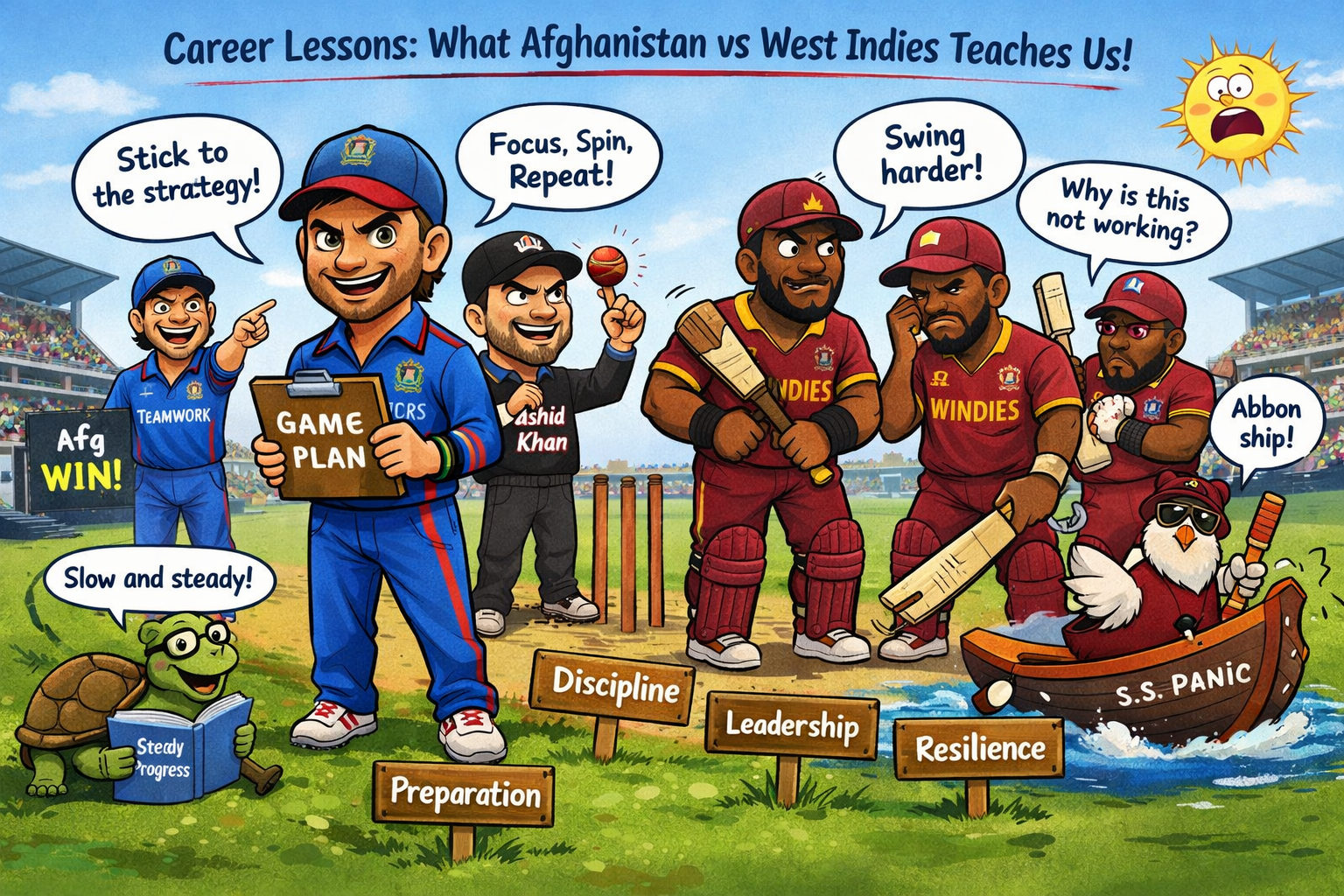
What Afghanistan’s Win Over West Indies Teaches Employers and Job Seekers
By Inderjeet – JobReadyPlacements.com, Mohali, Punjab, IndiaAfghanistan’s commanding 38-run victory over West Indies was not just a cricketing achievement — it was a lesson in preparation, belief, teamwork, and leadership. On a surface that demanded patience and intelligence, Afghanistan showed how disciplined execution can overpower reputation and experience. This match was detailed in the ESPNcricinfo match report and summary of key performances, which highlighted the partnership and bowling figures that defined the game. (Source: ESPNcricinfo – Afghanistan vs West Indies match report)The same principles apply directly to the modern workplace.1. Rising After Early SetbacksAfghanistan lost two early wickets and found themselves struggling at 19 for 2. Many teams would have collapsed under pressure. Instead, Zadran and Rasooli showed patience, trust, and clarity as they rebuilt the innings ball by ball, a performance highlighted in the Outlook India coverage of the match. (Source: Outlook India – Afghanistan vs West Indies highlights)Career Lesson:For job seekers, early rejection or failure does not define the journey. What matters is how quickly you regain confidence and continue performing. Employers value resilience more than perfection.2. Partnership Over Individual BrillianceThe 162-run partnership between Zadran and Rasooli became the foundation of Afghanistan’s victory. Neither tried to dominate alone — they supported each other, rotated strike, and trusted the process, as noted in the NewKerala match summary. (Source: NewKerala – Zadran & Rasooli partnership report)Career Lesson:Workplaces reward collaboration. Employers seek professionals who grow within teams, not just individuals who shine alone. Success is multiplied when people work together.3. Preparation Creates AdvantageAfghanistan understood the pitch conditions and adjusted their approach. Their bowlers used pace variations and tight lines, while their batters respected the conditions and built smartly — insights that were part of multiple post-match analyses. (Sources: ESPNcricinfo / Outlook India)Career Lesson:Preparation separates average professionals from high performers.Job seekers who research companies and prepare well stand out.Employers who prepare teams for challenges consistently outperform competitors.4. Leadership Under PressureRashid Khan’s bowling spell was not just about wickets — it was about control, discipline, and decision-making. His impact was highlighted in expert match commentary and player performance statistics. (Source: ESPNcricinfo bowling analysis)Career Lesson:Strong leadership is about clarity and adaptability, not authority. Employers who lead with thoughtful decision-making create confident teams. Employees who demonstrate leadership thinking grow faster in their careers.5. Discipline Beats ReputationWhile West Indies had powerful international hitters, Afghanistan’s discipline, structure, and belief showed how consistency defeats reputation — a theme common in expert reflections on this match. (Sources: Outlook India / ESPNcricinfo)Career Lesson:Your job title, company name, or degree matters less than how you perform daily. Employers trust reliability more than hype. Job seekers must focus on skill delivery, not labels.6. Confidence Without ArroganceAfghanistan played with confidence — not overconfidence. They stayed calm even when boundaries were hit and trusted their plan, as described in the match summaries. (Source: NewKerala / ESPNcricinfo)Career Lesson:Confidence in interviews, meetings, and presentations builds trust. Employers notice attitude as much as ability.Final InsightAfghanistan’s victory reminds us that success — in sport or in careers — is not about being the biggest name. It is about:PreparationDisciplineTeamworkLeadershipResilienceFor job seekers, the message is clear: believe in your journey and keep performing.For employers, the lesson is powerful: invest in people, culture, and preparation. 🔗 Sources & ReferencesThe match information and performance details used in this article are based on coverage from leading cricket news platforms:👉 ESPNcricinfo – Afghanistan vs West Indies Match Reporthttps://www.espncricinfo.com/search?q=Afghanistan%20vs%20West%20Indies👉 Outlook India – Afghanistan vs West Indies Highlightshttps://www.outlookindia.com/search?q=Afghanistan%20vs%20West%20Indies👉 NewKerala – Zadran & Rasooli Lead Afghanistan to Victoryhttps://www.newkerala.com/news/?q=Afghanistan%20West%20Indies#CareerLessons #JobSeekers #Employers #WorkplaceInsights #ProfessionalGrowth #LeadershipLessons #Teamwork #Resilience #CareerDevelopment #HiringTrends #FutureOfWork #SportsToCareer #AfghanistanCricket #WestIndiesCricket #JobReadyPlacements #CareerMindset #SuccessThroughDiscipline #WorkplaceCulture #PerformanceMatters
Read More
Real Sociedad vs Barcelona: Career Lessons Every Job Seeker Should Learn
Real Sociedad delivered a stunning performance against Barcelona in their recent La Liga encounter, reminding football fans that reputation alone does not decide results. Despite Barcelona’s experience, star power, and dominance in possession, Real Sociedad showed superior discipline, confidence, and execution on the pitch.According to coverage from BBC Sport and ESPN Football, the match highlighted how tactical organisation and mental strength can overcome even the biggest clubs.(Source: https://www.bbc.com/sport/football | https://www.espn.com/football)Barcelona entered the match as favourites, carrying the weight of expectation. However, Real Sociedad played with calm confidence, creating clearer chances and responding quickly whenever pressure increased.La Liga’s official match analysis also praised Real Sociedad’s teamwork and tactical balance, noting how their coordinated pressing and quick transitions unsettled Barcelona throughout the game.(Source: https://www.laliga.com)A Lesson Beyond FootballWhile the match was a sporting contest, its message extends beyond football. Real Sociedad’s victory showed that:Preparation matters more than reputationConfidence can defeat pressureTeamwork can overcome individual brillianceBarcelona’s players had the experience, but Real Sociedad had belief, structure, and hunger.Mental Strength Made the DifferenceWhenever Barcelona attempted to regain control, Real Sociedad responded with composure rather than panic. Their quick recovery after setbacks demonstrated strong mentality — a quality that often separates winners from contenders.Football analysts have described this match as another example of why La Liga remains one of the most competitive leagues in the world, where no team can be underestimated.Final WordThe Real Sociedad vs Barcelona match proved once again that football is unpredictable, emotional, and deeply human. It is not always the biggest name that wins — it is the team that prepares, believes, and performs when it matters most.ReferencesBBC Sport Football – https://www.bbc.com/sport/footballESPN Football – https://www.espn.com/footballLa Liga Official Website – https://www.laliga.com
Read More
Career Lessons from Virat Kohli: What Job Seekers Can Learn
By Srijan – JobReadyPlacements.com, Mohali, Punjab, IndiaVirat Kohli is celebrated as one of the greatest cricketers of all time. Beyond his record‑breaking centuries and match‑winning innings, his career offers valuable lessons for job seekers, professionals, and aspiring leaders. At JobReadyPlacements.com, we believe that these traits can guide you in building a successful and fulfilling career.1. Discipline is KeyKohli’s commitment to physical fitness, disciplined practice routines, and consistent performance has been widely documented and praised. His emphasis on discipline and hard work is a major pillar of his success, with Kohli himself stating that “discipline and hard work are top priorities” and that success comes through relentless effort.(NDTV SPORTS)Career takeaway: In your professional life, consistent effort, punctuality, and dedication are essential to stand out and excel.2. Set Clear GoalsKohli has often spoken about his ambition and focus, continually setting targets for his performance and improvement. Learning from such exemplars underlines the importance of defining clear career goals and outlining actionable steps to achieve them.Career takeaway: Identify your objectives, track your progress, and celebrate small wins along the way.3. Resilience Leads to GrowthKohli’s ability to bounce back from setbacks, slumps in form, and criticism illustrates the importance of resilience. Reports highlight his journey through challenges and how he has used them to grow stronger and more focused.Career takeaway: In your career journey, view challenges and failures as learning opportunities, and don’t let them define you.4. Lead by ExampleThe former Indian captain has inspired teammates and fans through his intense work ethic and by consistently demonstrating what he expects from others. Leadership by example builds trust and sets a standard that others naturally follow.Career takeaway: In the workplace, true leadership is demonstrated through work ethic, reliability, and influence, not just by holding a position.5. Continuous Learning is EssentialKohli’s career shows a constant drive to evolve — from improving his fitness to adapting his techniques. Embracing change and learning throughout one’s career is key to staying competitive and relevant.(theoligo)Career takeaway: Professionals must embrace learning, upskilling, and adaptability to remain competitive in today’s dynamic job market.6. Passion Fuels SuccessKohli’s passion for cricket — reflected in his intensity on the field and his motivational outlook — drives his dedication and achievements. Numerous quotes attributed to him stress the importance of passion combined with effort as a formula for success.thedailyjagran Career takeaway: Passion for your work enhances performance, creativity, and career satisfaction.ConclusionVirat Kohli’s journey is more than a tale of cricketing glory — it is a blueprint for career excellence. At JobReadyPlacements.com, we encourage all our candidates to adopt these qualities — discipline, goal‑setting, resilience, leadership, continuous learning, and passion — to succeed in the workplace and beyond.— Srijan, JobReadyPlacements.com, Mohali
Read More
🔥 US-India Tariff News Sparks a Leadership Question for Employers: Are You Building Trust or Just Using Authority?
By Karanbir Singh | JobReadyPlacements.comIn a surprising turn in global trade, US senators asked former President Donald Trump to negotiate tariff relief with India, calling India’s duties on American pulse crops “unfair.”Instead of confrontation, lawmakers are advocating for dialogue and cooperation — a principle every workplace leader can learn from.Source: Hindustan Times🔗 Read more💡 Think about this: If global powers must collaborate to succeed, are your teams relying on authority, or on trust and collaboration? 🌍 Breaking Down the US-India Tariff IssueUS Senators Steve Daines and Kevin Cramer urged Trump to raise concerns about India’s 30% tariff on pulse crops like peas and lentils. They argue this tariff hurts American farmers and limits fair trade.Source: Deccan Herald🔗 Read moreIndia is the world’s largest consumer of pulses, accounting for 27% of global demand — showing why cooperation is essential.Source: NDTV Profit🔗 Read more👉 Reader question: In your organization, do teams understand why decisions are made — or do they just follow instructions?🤝 Leadership Lesson #1: Influence Wins Over PressureUS lawmakers chose negotiation over confrontation — and that’s a lesson for managers too.Leaders listen before decidingTeams feel included, not imposed uponTrust replaces fear, creating engagementSource (on negotiation & tariffs): The Federal🔗 Read more🔍 Self-check: Next time conflict arises, do you push harder or talk smarter?👥 Leadership Lesson #2: Teamwork Is Strategic, Not OptionalThe trade issue involves senators, farmers, and diplomats working together. No single voice can solve it alone.Similarly, in workplaces:Cross-functional collaboration avoids duplicationShared ownership strengthens accountabilityAlignment earns client trust💡 Think about it: Could your teams be working together more strategically?🎯 Leadership Lesson #3: Negotiation is a Daily SkillTrade talks aren’t solved in a day. Patience, listening, and compromise are key.For leaders:Resolve conflicts fasterRetain top performersBuild long-term client trustSource: Business Today🔗 Read more🏢 Why Employers Should CareGlobal trade mirrors the workplace: collaboration scales, control fractures.Ask yourself:Are your teams trusted to contribute ideas?Do you encourage open discussion, or just enforce rules?Could negotiation and collaboration improve results with clients and colleagues?#USIndiaRelations#TradeTalks#GlobalEconomy#BusinessLeadership#Leadership#Teamwork#TrustAtWork#WorkplaceCulture#Management#jobreadyplacementsAbout the Author:Karanbir Singh is a career strategist and leadership analyst at JobReadyPlacements.com, focusing on workplace skills, management insights, and professional growth.
Read More
Salary Negotiation Strategies to Get the Pay You Deserve
Salary negotiation is one of the most important career skills, yet many professionals feel uncomfortable discussing pay. Learning how to negotiate salary effectively can significantly impact your long-term earnings, job satisfaction, and career growth. This guide will help you navigate salary negotiations with confidence and strategy.Why Salary Negotiation MattersNegotiating your salary isn’t just about earning more money—it’s about being valued fairly for your skills, experience, and market worth. Studies consistently show that professionals who negotiate their pay earn significantly more over their careers than those who don’t. Understanding salary negotiation tips can help you avoid leaving money on the table.Research Market Salary Before NegotiatingOne of the most critical salary negotiation strategies is preparation. Before entering any negotiation:Research the average salary for your role, industry, and locationUse salary comparison tools and job market dataIdentify your salary range based on experience and skillsKnowing your market value gives you leverage and confidence when discussing compensation.Timing Is Key in Salary NegotiationsChoosing the right moment can greatly influence the outcome. The best time to negotiate salary is:After receiving a job offerDuring a performance review with documented achievementsWhen taking on additional responsibilitiesAvoid discussing salary too early in the interview process unless prompted.How to Negotiate Salary ConfidentlyConfidence is essential when negotiating pay. Use clear, professional language and focus on value rather than personal needs. Effective salary negotiation phrases include:“Based on my experience and market research, I was expecting a salary closer to…”“Considering my skills and contributions, I believe a compensation range of… is fair.”Remember, negotiation is a discussion—not a confrontation.Look Beyond Base SalaryCompensation negotiation isn’t limited to salary alone. If the employer can’t meet your salary expectations, consider negotiating:Performance bonusesRemote work optionsAdditional vacation daysProfessional development budgetsFlexible work hoursThese benefits can significantly increase your overall compensation package.Common Salary Negotiation Mistakes to AvoidTo negotiate salary successfully, avoid these common pitfalls:Accepting the first offer without discussionFailing to prepare salary dataApologizing or sounding unsureMaking ultimatums too earlyA calm, informed approach leads to better outcomes.Final Thoughts on Salary NegotiationMastering salary negotiation skills can transform your career trajectory. With proper research, clear communication, and confidence, you can negotiate pay that reflects your true worth. Remember, employers expect negotiations—it’s a normal and respected part of the hiring process.
Read More