Category: Jobseekers, Employers, General, Interview
US Planning Possible Strikes on Iran: What It Means for Global Jobs, Oil Prices and Skilled Professionals
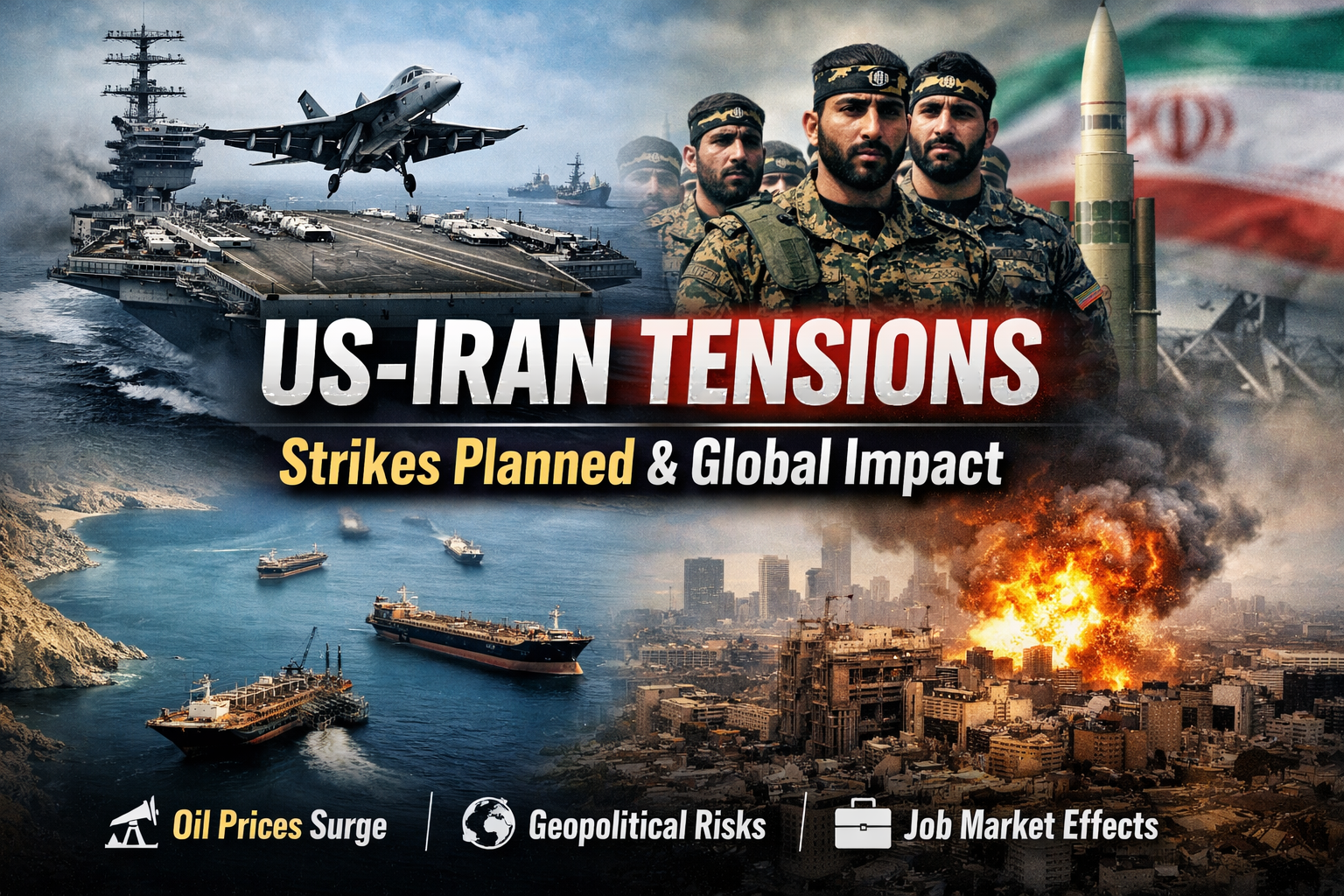
Washington, Feb 20 (Reuters): According to a Reuters report, US military planning regarding Iran has reached an advanced stage. Options under discussion reportedly include targeted strikes on specific Iranian leaders, security facilities, and nuclear infrastructure. Senior officials indicated that broader regime change scenarios are also being considered if ordered by the President.
This development signals rising geopolitical tension in the Middle East, especially if diplomatic talks fail. Iran has warned it will respond decisively to any military aggression. Analysts say any escalation could disrupt oil markets and global supply chains.
Why This Matters for Employers
For businesses and recruiters, geopolitical conflict is not just political news. It directly affects:
- Oil prices and transportation costs
- Global trade logistics
- Export-import timelines
- Currency volatility
- Investor confidence
If tensions escalate near the Strait of Hormuz, which handles a significant portion of global oil flows, energy prices could spike. Higher fuel costs increase operational expenses for manufacturing, aviation, logistics, and construction sectors.
Employers in these industries should prepare for:
- Increased demand for supply chain managers
- Risk analysts and compliance officers
- Energy market specialists
- Trade and international relations experts
Companies that plan workforce strategy early stay competitive during global uncertainty.
Impact on Students and Job Seekers
For students and professionals, geopolitical tension can create new career paths.
High-Demand Areas if Conflict Escalates:
- International Relations
- Defence Studies
- Global Trade & Logistics
- Energy Economics
- Risk Management
- Cybersecurity
Oil price volatility and regional instability often increase hiring in:
- Commodity trading firms
- Oil and gas companies
- Defence technology companies
- Global consulting firms
Students preparing for careers in international business or policy should monitor developments closely.
How This Connects to JobReadyPlacements
JobReadyPlacements focuses on preparing candidates for real-world employment shifts. When global tensions rise:
- Export companies look for skilled trade compliance professionals
- Energy firms hire analysts and engineers
- Governments and policy institutes seek research professionals
- Logistics companies expand crisis-response teams
Upskilling in global policy awareness and supply chain management can significantly improve employability.
Key Risks to Watch
- Possible retaliation by Iran against US bases in the Middle East
- Threats to close the Strait of Hormuz
- Surge in oil prices
- Market volatility impacting hiring decisions
Global events reshape job markets quickly. Professionals who understand macroeconomic trends have a strong advantage.
Sources
- US Strikes on Iran Could Target Individual Leaders, Officials Say – Reuters
- US Military Strikes on Iran Could Target Individual Leaders – Economic Times
- US Strikes on Iran Could Target Individual Leaders, Officials Say – Times of Israel
- U.S. Strikes on Iran Could Target Individual Leaders – Japan Times
- Russia Warns Against Any New US Strike on Iran – Reuters
#USIranTensions #MiddleEastCrisis #GlobalSecurity #OilPriceImpact #Geopolitics #DefenseNews #InternationalRelations #GlobalMarkets #EnergyCrisis #WorldNews2026 #JobMarketImpact #EconomicUncertainty